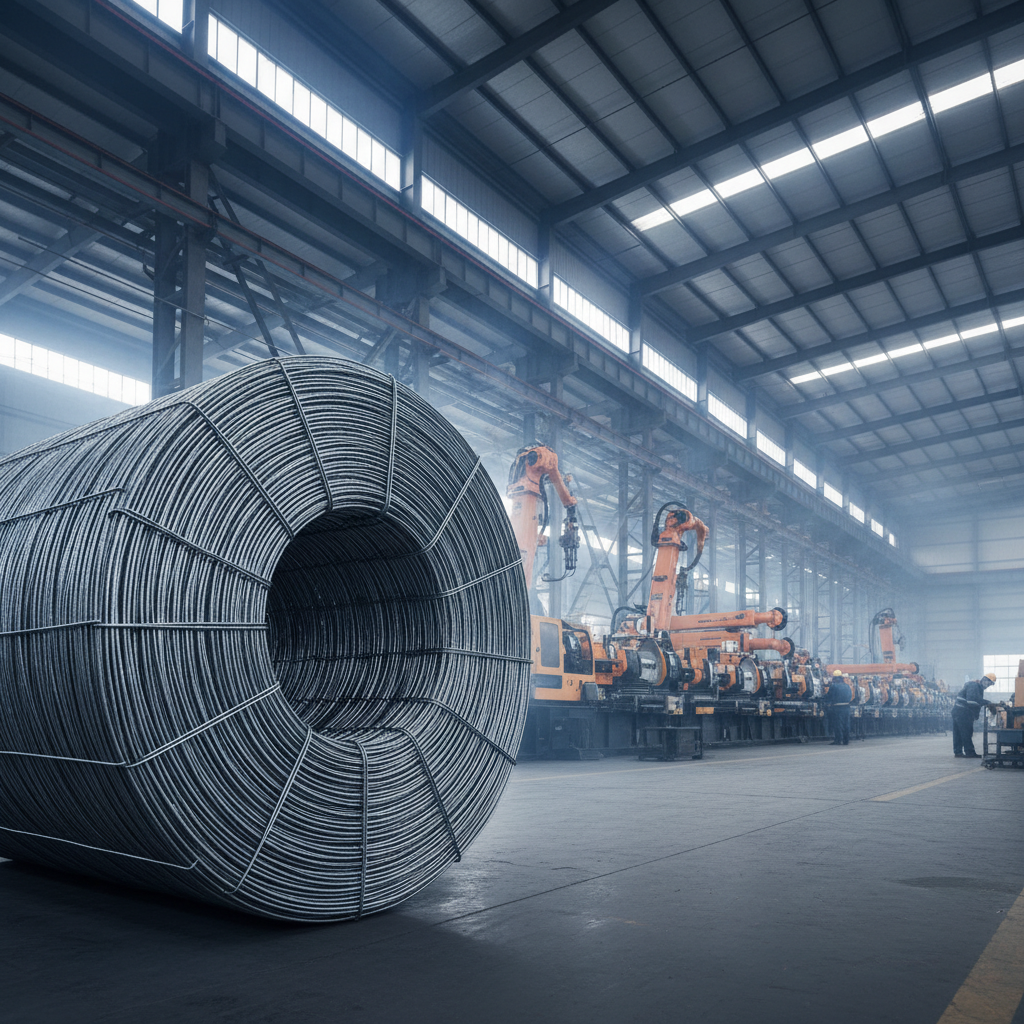
In the expansive realm of industrial metal fabrication, few materials are as versatile and essential as black annealed wire. This specialized carbon steel product undergoes a rigorous thermal process to transform rigid wire rods into a flexible, soft medium capable of meeting the demanding needs of construction and manufacturing. By reducing internal stresses and refining the grain structure, the annealing process ensures that the wire can be manipulated without cracking, making it a cornerstone of modern binding and fastening solutions.
Globally, the demand for high-quality binding materials is driven by the continuous growth of urban infrastructure and the need for reliable industrial fasteners. From the skeletal frameworks of skyscrapers to the intricate weaving of animal cages, the ability to control the hardness and elasticity of steel is paramount. Without the specific metallurgical properties provided by the thermal annealing process, many of the assembly techniques used in mining and chemical industries would be inefficient or structurally unsound.
Understanding the nuances of annealed wire is critical for procurement managers and engineers who seek a balance between tensile strength and malleability. Whether utilized as a black oiled wire for enhanced corrosion resistance or as a soft binding wire for construction, this material provides the structural integrity required for safety-critical applications. By leveraging Q195 wire rods and precise temperature controls, manufacturers can deliver a product that satisfies both international standards and specific customer requirements.
The Metallurgy and Process of Annealing
The production of black annealed wire begins with high-quality Q195 wire rods, which are subjected to a precise thermal annealing cycle. The wire is heated to approximately 1000°C and then cooled at a controlled speed to fundamentally alter its molecular structure. This process eliminates residual stresses accumulated during the drawing phase, effectively reducing the hardness of the steel and significantly improving its machineability.
Beyond simple softening, this thermal treatment refines the grains within the metal, adjusting the organizational tissue to eliminate defects. The result is a wire that possesses a stable size and a reduced tendency for distortion or cracking during bending. For specialized needs, black oiled wire is produced by adding a fuel oil injection step after the annealing process, providing an extra layer of surface protection against oxidation.
Core Technical Specifications and Materials
The primary material utilized for high-grade annealed wire is low carbon steel, specifically Q195 or SAE1008. These alloys are chosen for their optimal balance of strength and ductility, ensuring that the wire remains robust while being soft enough for manual twisting. The chemical composition of these materials allows for a consistent response to the annealing heat, ensuring that every coil meets the required metallurgical standards.
In terms of dimensions, the versatility of the product is evident in its wide range of gauges. Available from BWG4 to BWG25, with diameters spanning from 6mm down to 0.5mm, the product can be tailored for everything from heavy-duty industrial bracing to fine binding tasks. This range allows engineers to select the precise thickness required to support specific load-bearing requirements without adding unnecessary weight to a project.
Tensile strength is another critical parameter, typically ranging between 300 to 500 N/mm² for standard double black annealed twisted wires. By adjusting the temperature and the duration of the annealing cycle, manufacturers can fine-tune this strength. This means the wire can be delivered as "soft" for easy tying or "harder" for applications requiring more structural rigidity, depending on the client's specific technical blueprint.
Flexibility and Softness in Application
The hallmark of a high-quality annealed wire is its exceptional flexibility. Through oxygen-free annealing, the metal loses the brittle characteristics associated with cold-drawn steel, allowing it to be bent and twisted repeatedly without snapping. This makes it an indispensable tool in construction, where rebar must be tied securely to maintain the shape of concrete pours.
When comparing standard iron wire to annealed wire, the difference in "hand-feel" and application speed is significant. The softness of the annealed variety allows workers to create tight, secure knots quickly, reducing labor time and increasing the efficiency of the binding process. This is particularly vital in large-scale projects like welded mesh installation or the assembly of welded hangers.
Furthermore, the elasticity provided by the annealing process ensures that the wire can absorb minor vibrations and shifts in structural components without failing. This dynamic resilience is what makes the product suitable for diverse environments, ranging from the stability required in mining shafts to the flexibility needed in agricultural fencing and animal cage manufacturing.
Industrial Performance and Tensile Strength
Evaluating the performance of industrial binding materials requires a look at how different processing methods affect the final utility. The balance between the softness required for tying and the tensile strength required for holding loads is the primary engineering challenge. Depending on the annealing duration, the wire can be optimized for either maximum flexibility or maximum grip.
In practical terms, a wire with a higher tensile strength is preferred for heavy-duty industrial bracing, while a softer wire is ideal for intricate weaving or daily use as a binding material. The following data illustrates the performance ratings of different variants of annealed wire based on specific industrial utility metrics.
Performance Metrics of Various Annealed Wire Variants
Global Applications and Use Cases
The application of annealed wire spans across multiple sectors of the global economy. In the construction industry, it is the primary choice for tie wire, securing steel reinforcement bars in place before concrete is poured. Its ability to be twisted tightly and remain secure ensures the structural integrity of buildings and bridges worldwide.
Beyond construction, this material is widely used in the manufacturing of welded mesh and animal cages, where the wire must be bent into precise shapes without fracturing. In mining and chemical plants, it serves as a reliable binding agent for equipment maintenance and temporary structural supports. Its versatility also extends to the galvanizing industry, where it acts as a base material for further corrosion-resistant coatings.
Quality Control and Customization Options
To ensure the highest standards of quality, the annealing process is monitored with extreme precision. Because different wire thicknesses require different temperatures and annealing times to achieve the desired softness, manufacturers utilize adjustable thermal controls. This allows for a high degree of customization, enabling the production of wire that is specifically tailored to a client's hardness requirements.
Quality control also extends to the raw material selection. By using standardized Q195 and SAE1008 low carbon steel, manufacturers can guarantee a consistent response to the thermal treatment. This consistency is vital for industrial users who rely on a predictable tensile strength to ensure the safety and stability of their installations.
Customization is not limited to metallurgy; it also applies to the physical form. Whether the customer requires a single strand, a twisted double-wire configuration, or a specific diameter within the 0.5mm to 6mm range, the production line is designed for flexibility. This client-centric approach ensures that the final product integrates seamlessly into the user's existing workflow.
Packaging and Logistics Standards
Given the weight and nature of steel products, professional packaging is essential to prevent damage and ensure safe transport. Black annealed wire is typically offered in a variety of packaging options, including simple binding with wire, plastic film internal wrapping, or more robust protection using hessian cloth and woven bags. For high-end shipments, carton packaging is used to provide maximum stability.
Logistical flexibility is key to serving international markets. Coil weights can be customized from as little as 0.1kg for specialized small-scale use up to 1000kg for heavy industrial applications. This allows procurement officers to optimize their shipping costs and warehouse storage capacity based on the volume of material required for their specific project.
Ensuring that the wire arrives in a usable condition—free from excessive rust and with the coils tightly wound—is a priority. The use of black oiled finishes during the production phase provides an inherent layer of protection, which, when combined with professional moisture-proof packaging, ensures the product maintains its properties during long-distance maritime transit.
Summary of Annealed Wire Logistics and Packaging Specifications
| Packaging Method |
Protection Level |
Typical Coil Weight |
Primary Application |
| Wire Bind Only |
Basic |
100-500kg |
Local Construction |
| Plastic Film + Woven Bag |
Moderate |
50-200kg |
Export Markets |
| Hessian Cloth Wrap |
High |
100-1000kg |
Industrial Mining |
| Full Carton Box |
Maximum |
0.1-50kg |
Retail / DIY |
| Custom Palletized |
Industrial |
1000kg+ |
Large Infrastructure |
| Oiled-Wrap Combo |
Premium |
200-800kg |
Chemical Plants |
FAQS
Black annealed wire is produced through a thermal annealing process to increase softness and flexibility. Black oiled wire is a specific type of annealed wire that has an additional fuel oil injection step during production. This oil coating provides an extra layer of protection against moisture and oxidation, making it more suitable for environments where corrosion is a primary concern, whereas standard annealed wire is used for general binding.
Yes, the hardness and softness of the wire are controlled during the annealing process. By adjusting the heating temperature (up to 1000°C) and the cooling speed, manufacturers can produce wire that is either very soft for easy tying or relatively harder for applications requiring more tension. You can specify your requirements based on the desired tensile strength or application use case.
For construction rebar tying, a medium to fine gauge is typically preferred to allow for easy twisting while maintaining enough strength to hold the steel in place. Most construction projects utilize gauges within the BWG 16 to BWG 21 range, though the exact choice depends on the diameter of the rebar and the load requirements of the structural blueprint.
High-quality low carbon steel wire rods are used as raw materials, specifically Q195 or SAE1008. These materials are selected because they respond predictably to the annealing process, ensuring that the final product has a consistent grain structure, stable size, and the necessary flexibility without the risk of cracking under stress.
For international shipping, we use a combination of plastic film inner linings and hessian cloth or woven bags on the outside to protect the wire from moisture and mechanical damage. Depending on the customer's needs, we can also provide carton packaging or palletized coils. Weights can be customized from 0.1kg up to 1000kg per coil to optimize logistics.
Absolutely. Because of its high flexibility and reduced hardness, annealed wire is ideal for weaving and bending into the specific shapes required for animal cages. It allows for precision forming without the wire snapping, and its durability ensures that the cages remain secure over time.
Conclusion
In summary, black annealed wire represents a perfect intersection of metallurgical science and practical industrial utility. By transforming rigid Q195 carbon steel through precise thermal treatment, this material achieves the critical balance of flexibility, softness, and tensile strength. From the foundational ties of global infrastructure to the precision of animal cage weaving and mining supports, its versatility makes it an indispensable asset in the modern manufacturing toolkit.
Looking forward, the continued optimization of annealing temperatures and the integration of better surface protections like oil injection will further expand the lifespan and efficiency of these binding solutions. For businesses seeking reliable, customizable, and high-performance wire products, investing in quality-controlled annealed materials is the key to ensuring structural safety and operational efficiency. Visit our website for more information: www.hebeiwiremesh.com