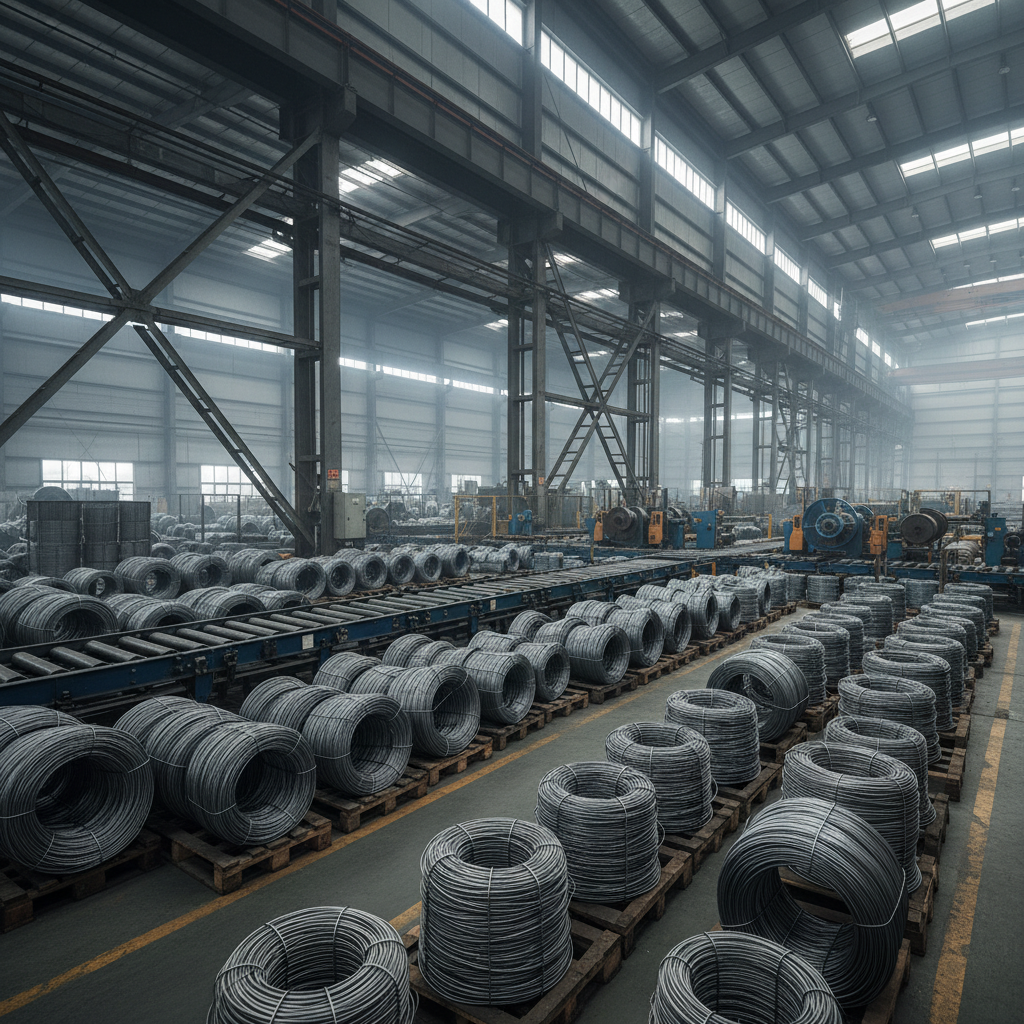
In the complex landscape of modern construction and industrial binding, the efficiency of small-scale fastening often determines the overall quality of a project. loop tie wire emerges as a critical yet understated component, providing a pre-formed, convenient solution for securing materials without the need for time-consuming manual twisting. From reinforcing steel bars in high-rise buildings to supporting delicate vine growth in commercial vineyards, these specialized wire loops ensure stability and structural integrity across diverse environments.
The global demand for high-quality binding materials has seen a steady increase as infrastructure projects in developing regions accelerate and agricultural precision improves. The challenge often lies in balancing tensile strength with flexibility; a wire that is too rigid will snap during application, while one that is too soft will fail under load. By utilizing low carbon steel and advanced annealing processes, the industrial manufacturing of loop tie wire addresses these challenges, offering a product that is both malleable for the user and resilient against the elements.
Understanding the technical specifications—such as wire gauge, finish, and material composition—is essential for procurement managers and engineers to maximize cost-efficiency and longevity. Whether it is the corrosion resistance of galvanized coatings or the flexibility of black annealed finishes, selecting the right variation of loop tie wire can significantly reduce labor costs and prevent premature failure of binding points. This guide explores the comprehensive utility and technical depth of these essential industrial fasteners.
Material Composition and Technical Standards of Loop Tie Wire
The structural integrity of loop tie wire is rooted in its metallurgical composition. Primarily manufactured from high-quality low carbon steel, including grades such as Q195 and SAE1008, these wires are engineered to provide a specific balance of tensile strength (ranging from 300 to 500 N/mm²) and ductility. This ensures that the wire can be looped and twisted tightly without fracturing, a critical requirement for construction binding where repeated stress is common.
Beyond basic carbon steel, high-tensile steel options are available for heavy-duty industrial requirements. The manufacturing process involves precision drawing to achieve wire gauges from BWG 4 to BWG 20 (roughly 6mm down to 1.2mm), allowing users to select the exact diameter needed for their specific load-bearing requirements. This standardization ensures that the binding materials are compatible with international building codes and agricultural standards.
Essential Finishes for Environmental Resistance
Selecting the correct finish for loop tie wire is not merely an aesthetic choice but a strategic decision based on the operational environment. For indoor construction or temporary binding, Black Annealed finishes are preferred due to their superior softness and ease of twisting, which reduces hand fatigue for workers during large-scale installations.
In outdoor or humid environments, Galvanized Annealed finishes are the gold standard. The zinc coating provides a sacrificial layer that prevents the underlying steel from oxidizing, making it ideal for securing trees, vines, or outdoor support structures. For specialized industrial applications or high-corrosion areas, PVC coating adds an extra layer of waterproof protection and prevents the wire from cutting into softer materials like plant stems or plastic conduits.
For high-end architectural or chemical-heavy environments, stainless steel and coppered options are utilized. These materials offer the highest level of corrosion resistance and electrical conductivity where required, ensuring that the binding remains intact for decades regardless of exposure to salt spray or industrial pollutants.
Versatile Applications Across Global Industries
The utility of loop tie wire extends far beyond simple construction. In the agricultural sector, it is an indispensable tool for securing creepers, vines, and young trees to trellises, ensuring optimal growth patterns and maximizing crop yields by providing stable support structures that can withstand wind and weather.
In the industrial realm, these wires serve as efficient seals for laundry bags, industrial sacks, and various packaging needs. The "small coil" format allows for rapid deployment in warehouses and factories, where thousands of bags must be secured daily. This versatility makes it a staple in both logistics and hospitality industries globally.
Within the construction industry, it is primarily used as a binding material for rebar and other structural elements. By providing a consistent loop size—ranging from 3 inches up to 44 inches—it allows contractors to maintain precise spacing and alignment of steel components before the concrete is poured, ensuring the safety and longevity of the building.
Performance Metrics and Gauge Analysis
The performance of loop tie wire is largely dictated by its wire gauge. A thinner gauge (e.g., BWG 20) offers maximum flexibility and is ideal for light-duty bagging or gardening, whereas a thicker gauge (e.g., BWG 6) provides the necessary rigidity for heavy construction binding.
To understand the trade-off between strength and flexibility, engineers often look at the tensile strength relative to the diameter. While a higher tensile strength prevents stretching, too much rigidity can lead to brittle failure during the looping process.
Loop Tie Wire Efficiency by Gauge Type
Packaging Logistics and Deployment Efficiency
For large-scale industrial operations, the packaging of loop tie wire is as important as the wire itself. Available in various roll quantities—including 1,000, 2,000, 2,500, 4,000, and 5,000 pieces per roll—this flexibility allows companies to order based on their specific project volume, reducing waste and optimizing inventory space.
To ensure safe transport and easy handling on-site, rolls are typically packed in woven bags and secured on pallets. The package weight is customizable, generally ranging from 10kg to 50kg, ensuring that the materials can be easily moved by workers without requiring heavy machinery for every small batch of binding wire.
Long-Term Value and Reliability in Construction
The long-term value of investing in high-grade loop tie wire lies in the mitigation of risk. In structural engineering, the failure of a few binding points can lead to the shifting of rebar during a concrete pour, which can compromise the entire structural integrity of a slab or column. By using wires with a consistent tensile strength of 300-500 N/mm², builders ensure a reliable bond.
From an economic perspective, the use of pre-looped wire significantly reduces labor hours. Workers no longer need to cut and twist every single tie manually; they can simply deploy the pre-formed loop, leading to faster project completion and lower payroll costs.
Furthermore, the ability to customize the wire according to specific customer requests—whether it be a unique length or a specialized coating—means that the product can evolve with the project's needs, providing a tailored solution that off-the-shelf hardware often lacks.
Future Innovations in Binding Wire Technology
The future of loop tie wire is trending toward sustainable materials and automated application. As the construction industry moves toward "green building" certifications, there is an increasing demand for recyclable steel and eco-friendly PVC coatings that reduce the environmental footprint of binding materials.
Digital transformation is also impacting how these materials are used. We are seeing the rise of automated tying tools that can integrate with pre-looped wire systems to accelerate the binding process in prefabricated housing and modular construction, where speed and precision are paramount.
Additionally, advancements in metallurgy are leading to the development of "smart coatings" that can indicate corrosion levels through color changes, allowing facility managers to identify failing binding points in infrastructure before they become critical safety hazards.
Technical Specifications and Performance Matrix of Loop Tie Wire
| Material Grade |
Finish Type |
Primary Application |
Durability Score (1-10) |
| Low Carbon Steel (Q195) |
Black Annealed |
Indoor Construction |
6 |
| SAE1008 Steel |
Galvanized |
Agricultural Support |
8 |
| High Tensile Steel |
PVC Coated |
Industrial Piping |
9 |
| Stainless Steel |
Natural/Polished |
Marine Environments |
10 |
| Low Carbon Steel |
Coppered |
Electrical Grounding |
7 |
| Mixed Alloy Steel |
Galvanized Annealed |
General Binding |
8 |
FAQS
Black annealed loop tie wire is treated to be softer and more flexible, making it ideal for manual twisting in indoor construction where corrosion is not a primary concern. Galvanized loop tie wire is coated with zinc to prevent rust, making it the superior choice for agricultural use, outdoor fences, or any environment exposed to moisture and oxygen.
Choose your gauge based on the load and the material being tied. For light tasks like sealing bags or supporting small plants, BWG 18-20 is sufficient. For reinforcing construction rebar or heavy industrial supports, BWG 6-12 is recommended to ensure the wire does not snap under the tension of the structure.
Yes, loop tie wire is highly customizable. Lengths can range from 3 inches up to 44 inches depending on the diameter of the object being bound. Additionally, packaging can be tailored to roll sizes of 1,000 to 5,000 pieces, with total package weights adjusted between 10kg and 50kg to meet specific logistics requirements.
Yes, for living plants, PVC coated wire is generally better. The plastic coating prevents the metal from cutting into the tender stems of vines and creepers as they grow. While galvanized wire is rust-resistant, the PVC layer adds a cushion that protects the biological tissue of the plant from abrasion.
Standard industrial loop tie wire typically features a tensile strength between 300 and 500 N/mm². This range ensures that the wire is strong enough to hold structural components in place but remains ductile enough to be twisted and tightened without fracturing during the installation process.
To ensure protection during transit, the wires are wound into coils and packed into heavy-duty woven bags. These bags are then arranged on pallets and shrink-wrapped to prevent shifting. This method maximizes container space and allows for efficient unloading using forklifts at the destination port.
Conclusion
In summary, loop tie wire is a versatile and essential tool that bridges the gap between raw industrial strength and practical application. By offering a wide range of gauges (BWG 4-20), diverse finishes (black annealed, galvanized, PVC coated), and flexible packaging options, it serves as a critical component in construction, agriculture, and logistics. The ability to maintain high tensile strength while ensuring ease of use makes it an invaluable asset for reducing labor costs and enhancing structural reliability.
As the industry evolves toward more sustainable and automated processes, the importance of selecting a high-quality, standardized binding material becomes even more apparent. Whether you are securing a skyscraper's foundation or supporting a commercial vineyard, investing in the correct material specifications ensures long-term durability and safety. To explore our full range of professional wire solutions, visit our website: www.yjdwiremesh.com.